
My accent comes straight from the heart
Smaranda “Mada” Cazan-Livescu, the Romanian woman from the United States of America who carries Romania forward through education and writing: “My accent comes straight from the heart”
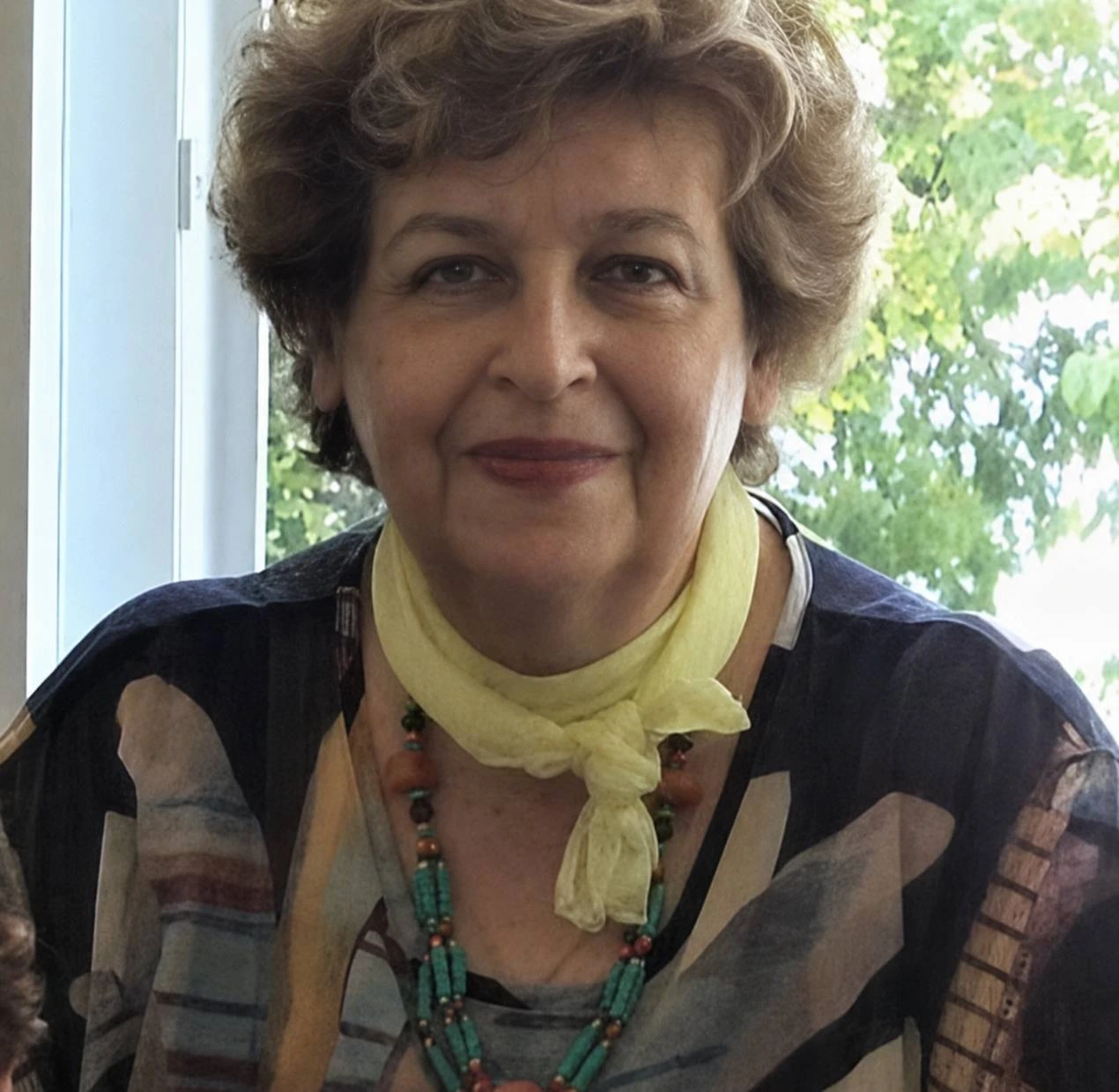 Smaranda “Mada” Cazan-Livescu, the Romanian woman from the United States of America who carries Romania forward through education and writing: “My accent comes straight from the heart.”
At the Diaspora Days in Iasi, among the voices that stood out at this year’s edition was that of Smaranda “Mada” Cazan-Livescu — a woman who, over nearly 40 years spent in the United States, has managed something unusual: to build, all at once, a career in American education, a body of literary work, and an international organization dedicated to Romanian women in the diaspora.
Alongside her, in Iasi, were people and institutions who consistently support her in what she does: Mrs. Sandra Pralong, always present alongside UNIFERO, Entela Binjaku, a representative of the Aromanian community in Albania, Milena Lițoiu from Canada, and Vali Vișan from Austria, as well as the support of Mrs. Adina Stoleru, PhD and Head of the Diaspora Department at the Iasi City Hall, and of Mayor Mihai Chirica.
Speaking about the people around her organization, Smaranda Cazan-Livescu gratefully mentions a long list of collaborators: Oana Poleacec from Italy, university professor Dr. Veronica Mihalache; researcher Diana Paunoiu, from Craiova, both core members of the Board of Directors; Nadia Urian, journalist, teacher, and librarian in Romania; Serena Adler, host of the show “Universul la feminin” (“The Feminine Universe”); first-aid instructor Virgil Mihailovici, from Constanta; the organization’s webmaster, Răzvan Șerpu; Lucian Ioan Livescu, journalist and math-physics teacher, who is, in fact, her husband of more than 40 years; Roxana Almășan, from the United States; prolific writer Gabriel klimowicz; Dr. Constantin Poiană, director-manager at the “Prof. Dr. Eduard Apetrei” Hospital in Buhuși; and teacher Elena Preda, among many others.
In this context, the conversation with Smaranda Cazan-Livescu became an extensive portrait of a woman who turned leaving Romania into a life devoted to education, to the Romanian community in the diaspora, and to literature.
Leaving Romania, nearly 40 years ago
Smaranda Cazan-Livescu left Romania in November, nearly 40 years ago, together with her husband. It was, she says, a difficult departure, because the two of them left their young children at home — their daughter, Laura, and their son, Adrian. “We left because we felt we had to speak out, from abroad, about what was really happening in Romania, without taking on any claim to represent anyone. We simply left so that we could talk about what was really happening in Romania — not all the beautiful lakes the news used to show,” she recounts.
The actual departure took place under the pretext of an exhibition in Poland, arranged with a former roommate from her time in Iași — Smaranda Cazan-Livescu graduated from university in Iasi — taking with her a few paintings, since she had also practiced graphic art and painting, alongside professor Dragoș Pătrașcu, a graphic artist of worldwide renown. Under the pretext of an exhibition in Kraków, the two of them left Romania. What followed was a period of nearly a year and a half spent in a refugee camp in Austria, before she was admitted into the United States.
A nearly 40-year career in American education
Smaranda Cazan-Livescu is a graduate of “Alexandru Ioan Cuza” University in Iasi, with English as her major and Romanian as her minor, where she had also begun a doctorate she was never able to finish.
In the United States, her coursework was evaluated and recognized through an institute specialized in the equivalency of studies completed in other countries, and she went on to take additional exams in order to be allowed to teach — including for the Exceptional Children specialization, dedicated to children with special educational needs. She initially worked as a teacher’s assistant, then, following a very rigorous exam in which more than three thousand candidates competed for only three positions, she was selected for the Academy. “Not to boast about myself — I’m praising the system I left behind at the time, the Romanian system, which was an exceptional one,” she says.
After a period of about three years, she was brought into the American university system, later going on to teach teachers how to teach — “you are teaching teachers how to teach,” she was told. She received a Fulbright scholarship and taught, among other places, in Latvia, in China for a year and a half, and in Saudi Arabia for two and a half years, at an institute within a women’s college, while her husband, Lucian, taught at Aramco, the oil company’s university. For about six years now, since retiring, Smaranda Cazan-Livescu has been volunteering as a teacher at senior centers, where she has formed interactive groups of Spanish-speaking students and Americans who teach one another.
What the Romanian education system could learn from the American experience
Asked what the Romanian education system could learn from the American experience, Smaranda Cazan-Livescu speaks about modernity and about what she calls the “golden triangle” — the teacher-parent-student relationship, a concept she has implemented in the state of Georgia, where she lives, and which she mentioned both at the recent UNIFERO conference and at the Diaspora Days in Iasi. None of the three components should be left out, she says: parents need to be actively involved, not summoned only to be reprimanded, and students need to become partners of the teacher, not passive spectators of the lesson.
She speaks with gratitude about the quality of Romanian education in the past, stressing that this wasn’t due to the communist system, but to the talent of the teachers of that time, who were well trained. Her own parents were teachers, and among their students were several prominent figures of Romanian culture.
From the American system, she recommends using the library as a genuine research resource for pupils and students, alongside online sources, as well as constant, weekly professional development for teachers — a practice she herself followed year after year. She talks about concrete classroom methods: vocabulary walls, mobile libraries, presentations delivered by the students themselves, in groups, with a jury made up of classmates, materials prepared in advance for students who arrive late or are absent, as well as the “ticket to leave” — a slip that students fill out at the end of the lesson, noting the idea that stayed with them. These practices are also found, she says, in the textbook she produced together with UNIFERO, “The Romanian Language, Romania, Culture, Education, Traditions — Global Identity Passport.”
Another point Smaranda Cazan-Livescu strongly emphasizes is the genuine inclusion of students who come from other countries, including from the Republic of Moldova, who should never be marginalized because of their accent. “How can I tell a student who comes from Bessarabia to move to the back row because they have an accent? We all have an accent!” she says. When her American colleagues notice her accent and ask her where it comes from, her answer is always the same: “Straight from the heart.”
UNIFERO — from a stolen idea to an international movement
In 2007, Smaranda Cazan-Livescu founded UNIFERO — the International Union of Romanian Women. The original idea dates back to 2005-2006, when the organization was meant to be called LIFERO — the International League of Romanian Women. The statute had already been prepared and presented to a group of women, but, just before she left for the United States, the name was registered by someone else, and she was asked to pay a monthly fee to open a branch of her own idea. “At that moment, I said I wasn’t going to do anything more in Romania,” she recounts.
Talking with a close friend, Mr. Viorel Mayer from Israel, who told her it would be a shame to give up on her own “child” and that she should simply give it a different name, Smaranda Cazan-Livescu started the International Union of Romanian Women — UNIFERO, with a statute in English and a board of directors in the United States. The organization later expanded, coming to bring together women, families, and supporters from around the world, including men. “The International Union of Romanian Women is for the women of the world, their families, and their supporters,” she says.
What UNIFERO means today for the Romanian diaspora
For Smaranda Cazan-Livescu, UNIFERO means, above all, concrete community support. The organization has supported the founding of Romanian churches, regardless of denomination, among them the Romanian church “Saints Constantine and Helen,” where the interior painting was recently completed and which brings together, at its events, Romanians from every community — Polish, Indian, American, Spanish-speaking — and various religious denominations.
UNIFERO supports the Romanian language, traditions, and culture, through Sunday schools for the Romanian language, through commemorations of writers and prominent figures who put Romania on the map of the world, but also through concrete social projects, such as the American “Sandwich” project, through which, every Thursday, a few hundred sandwiches are distributed to families in need and to homeless people. Over time, the organization has held mid-year conferences in the United States, in the Czech Republic, in Austria, and in Romania, bringing donations and organizing fundraisers for families and young people in need. “UNIFERO means encouragement, not obligation,” says Smaranda Cazan-Livescu. “It is, I would say, an open book for doing good.”
Why it was important to bring UNIFERO’s projects to Iasi
For Smaranda Cazan-Livescu, Iasi remains a special city, the city where she studied and where she taught, at the faculty of languages. “Iași stays in our souls,” she says. She speaks with admiration about the city’s transformation in recent years, which she considers exemplary: “Iasi looks like a living city. Iasi is a flower, Iasi is light, Iasi has so many cultural events for children, for young people, for adults, no matter their age.”
As concrete examples, she recalls the Albano concert, attended by nearly 10,000 people who sang along with the artist, as well as chess competitions for students, many of whom later went on to reach podium finishes internationally, including in the United States. “Congratulations to the teachers and to Iasi, for encouraging things like this. It was a joy for me too, and it meant regaining the energy to keep going, because it can be done. I was shown that it can be done,” she says.
Mada Cazali — her voice as a writer
Alongside her work in education and in the diaspora, Smaranda Cazan-Livescu writes literature under the pen name Mada Cazali. The name “Mada” has stayed with her since childhood — she was never able to pronounce her own name properly, so she remained “Mada” to everyone, including later, at the Polytechnic, where she worked. The name “Cazali” was suggested to her by her own daughter, Laura.
She began writing as a child, and as a teenager she sent poems to the magazine “Cronica,” where she was encouraged by Zaharia Sângeorzan, the man who urged her to attend university in Iasi. She wrote essays and poems published in various collections, including the magazine “Cetatea lui Bucur,” edited and published by writer and journalist Elisabeta Iosif, who is, incidentally, also a UNIFERO member.
The need to write novels was born out of painful experiences lived in the refugee camp in Austria, where she met Mother Teresa, who prayed together with the refugees, and where she heard painful stories from those who arrived after her. That is how three novels have come about so far: “Destăinuiri cu scoici și apă sărată” (“Confessions with Seashells and Salt Water”), “Timpuri, în goană” (“Times, in a Rush”), and “Cercul de foc” (“The Ring of Fire”), written in Romanian and also translated into English. A fourth novel, “Fântâna regelui” (“The King’s Fountain”), is in progress, and a fifth, a kind of autobiography titled “Trenul vieții” (“The Train of Life”), will follow after that. “Any resemblance to characters and events from real life is coincidental — in my case, it isn’t coincidental, because I use a great many true things,” she says. The same team of detectives appears in each of the novels, carrying the story forward from one volume to the next.
Asked what she finds in literature that she doesn’t find in her other activities, Smaranda Cazan-Livescu says that writing allows her to reveal herself more clearly. “At a conference, you don’t have time to reveal yourself. But the moment you write, you’re talking with yourself,” she says, recalling that, throughout her life, she has also practiced graphic art, painting, and ballet, and sang for 13 years in the Children’s Radio Choir, an artistic experience she remembers as an important part of her formation.
An unfulfilled dream: returning to Chisinau
At the end, asked whether there is still something she hasn’t managed to do but very much wants to, Smaranda Cazan-Livescu speaks about her wish to help the people around her recognize themselves as “a fragment of God.” “We are fragments of this stained-glass window we live in. If one fragment is missing, our world falls apart,” she says, confessing that she wishes she could talk with people, help them, stop for a woman selling flowers or for someone who needs help carrying a bag.
Her last stated wish is to return to Bassarabia, to Chisinau, where she went years ago, crossing the Prut — “that blue line that separated Romanians from Romanians,” she says. “That’s what I wish for.”
The story of Smaranda “Mada” Cazan-Livescu thus joins the gallery of portraits that the Diaspora Days in Iasi bring before the community year after year: people who left Romania and who, far from home, find their own language — whether through education, advocacy, culture, or, as in her case, through writing — and who, regardless of the distance, remain tied to the places that shaped them.